Hayoung Choi Biography: Age, Cello Career, Queen Elisabeth Victory and Achievements
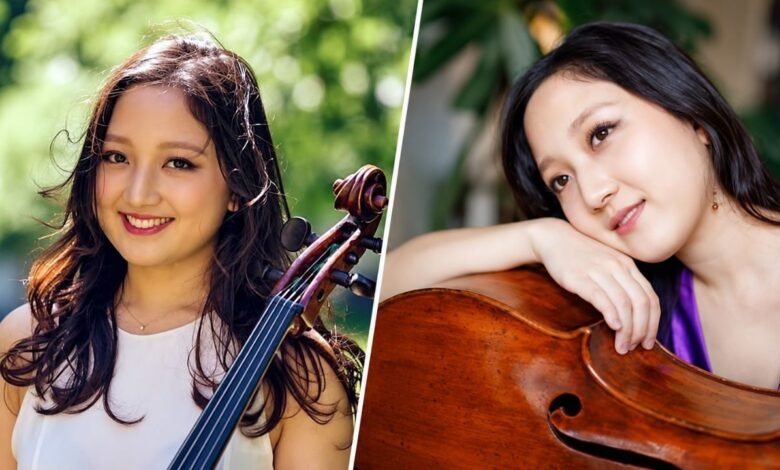
Hayoung Choi is a South Korean-German cellist whose career has developed through major competitions, leading European music academies and performances with respected orchestras around the world. Born in Bielefeld, Germany, on February 6, 1998, she began developing her musical abilities at a young age and entered the professional concert world as a child. Her victory at the 2022 Queen Elisabeth Competition for Cello became the defining achievement of her career so far. Beyond competitions, her work includes solo performances, chamber music, collaborations with established musicians and continuing studies in Baroque cello.
Hayoung Choi Early Life and Background
Hayoung Choi was born on February 6, 1998, in Bielefeld, Germany, and comes from a Korean musical background. Growing up in Germany gave her an early connection to the European classical music tradition, while her Korean heritage remained an important part of her identity. She showed a strong interest in music during childhood and began receiving serious musical training while still young. Her early development eventually led her toward international competitions and performances.
Her childhood was closely connected to musical education rather than being limited to ordinary school activities. She studied through the pre-college program of the Korean National University of Arts, where she worked with Myung-Wha Chung and Hyongwon Chang. This early training provided a foundation for her technical development and helped prepare her for a professional career. Her progress during these years was reflected in the competition results she achieved before reaching adulthood.
Hayoung Choi Age and Birth Details
As of October 2026, Hayoung Choi age is 28 years. She was born in 1998, meaning that she entered her professional career during a period when many musicians are still completing their basic training. Her early start is one of the most interesting aspects of her biography because she was already appearing on major stages during her teenage years. Rather than waiting until adulthood to establish herself, she gradually built an international reputation through performances and competitions.
Her birth in Germany and Korean family background also help explain the international character of her career. She has studied in several European countries and has performed for audiences in Europe, Asia and North America. Her education and professional opportunities have crossed national boundaries throughout her development. This international experience has become a defining feature of her work as a cellist.
Early Musical Training and First Performances
Choi’s first major professional experiences came surprisingly early. At the age of 12, she made her debut with Camerata Salzburg, performing Joseph Haydn’s Cello Concerto No. 1. The performance gave her an opportunity to appear with an established ensemble while she was still a young musician. It also foreshadowed a career in which major concert appearances would become a regular part of her development.
Her early competitions provided another important route into the international classical music scene. She achieved first prizes in several competitions while still young, demonstrating that her abilities were already attracting attention beyond her immediate educational environment. Her early results included competitions associated with young cellists in Europe. These achievements helped establish the foundation for the international career that followed.
Early competition achievements
Some of the notable milestones from the early part of her career include:
- First Prize at the Antonio Janigro International Cello Competition in 2008
- First Prize at the Justus Dotzauer Competition in 2009
- First Prize at the Johannes Brahms International Competition in 2011
- First Prize at the Krzysztof Penderecki International Cello Competition in 2018
- First Prize at the Queen Elisabeth Competition for Cello in 2022
These results show how her career developed progressively rather than through one isolated breakthrough. Each competition provided additional experience and exposure as she moved from youth competitions toward major international events. Her success at an early age also placed her among musicians expected to develop into important performers. The 2022 Queen Elisabeth victory later confirmed that trajectory.
Hayoung Choi Education and Musical Development
Education has played a major role in Hayoung Choi’s development as a musician. After her early training, she studied at the Purcell School in England, an institution known for its focus on young musicians. She later continued her studies at Kronberg Academy in Germany, where she worked with internationally recognized cellist Frans Helmerson. Her education also included studies at the Escuela Superior de Música Reina Sofía in Madrid with Ivan Monighetti.
Her training continued beyond the traditional path of studying only the modern cello repertoire. Choi has pursued Baroque cello studies at the University of the Arts Berlin, working with Lea Rahel Bader. This interest gives another dimension to her musical development because Baroque performance requires attention to historical performance practices and stylistic differences. Her willingness to study different approaches to the instrument reflects a broader interest in understanding music within its historical context.
Teachers who influenced her development
Several respected musicians have been associated with Choi’s education:
- Myung-Wha Chung
- Hyongwon Chang
- Frans Helmerson
- Wolfgang Emanuel Schmidt
- Ivan Monighetti
- Lea Rahel Bader
Each stage of her education contributed something different to her development. Her studies with Frans Helmerson at Kronberg Academy were particularly important during her transition toward professional-level performance. She later continued professional studies with Wolfgang Emanuel Schmidt. These experiences gave her access to different teaching approaches and musical perspectives.
The Johannes Brahms Competition Achievement
One of the earliest major milestones in Hayoung Choi’s career came at the Johannes Brahms International Competition in 2011. She won first prize at the age of 13 and became known for her achievement as the youngest winner in the competition’s history. Winning at such an age placed her in the spotlight within the international young musician community. It also demonstrated that her early success was not limited to performances arranged for young musicians.
The Brahms competition was significant because it came before her later victories at the Penderecki and Queen Elisabeth competitions. It showed a pattern of competitive success that continued for more than a decade. Her results during this period gave her additional performance experience and helped build confidence on international stages. These early achievements became part of the foundation for her later professional career.
Hayoung Choi at the Krzysztof Penderecki Competition
In 2018, Hayoung Choi won first prize at the Krzysztof Penderecki International Cello Competition in Poland. By this stage, she was no longer simply being recognized as a promising young performer. She was establishing herself as a serious international cellist capable of competing successfully at a high level.
Her success at the Penderecki competition also came after years of musical education and performance experience. She had already studied at important institutions and worked with experienced teachers by this point. The result therefore represented another stage in a longer professional development rather than an unexpected breakthrough. It helped strengthen her reputation before the Queen Elisabeth Competition four years later.
Hayoung Choi and the Queen Elisabeth Competition
The most significant milestone in Hayoung Choi’s career came in 2022 when she won first prize at the Queen Elisabeth Competition for Cello. The competition is one of the best-known international classical music competitions, and its cello edition brought together talented performers from around the world. Choi’s victory established her as one of the leading young cellists of her generation. It also significantly increased international attention around her performances.
Her connection with Haydn’s Cello Concerto No. 1 makes the achievement particularly interesting. She had performed the same work during her professional debut with Camerata Salzburg at the age of 12. Years later, she performed Haydn’s Cello Concerto No. 1 in the Queen Elisabeth Competition with the Orchestre Royal de Chambre de Wallonie under conductor Vahan Mardirossian. The piece therefore appears at two important points in her professional story.
What the Queen Elisabeth Victory Meant for Her Career
Winning the Queen Elisabeth Competition opened new opportunities for Hayoung Choi. Competition victories of this level can lead to invitations from orchestras, concert halls and festivals, and her subsequent career reflects that expansion. She began appearing with major orchestras and performing in important venues in Europe, Asia and the United States. The victory also gave her greater visibility among classical music audiences outside specialist cello circles.
Her post-competition career has not been built solely around solo concerts. She has continued to work in chamber music and collaborate with established musicians. This combination has allowed her to develop as a performer in several settings. Her career after 2022 therefore shows a move from competition recognition toward a broader international performing career.
Hayoung Choi International Orchestra Career
Hayoung Choi has performed with orchestras and ensembles in Europe, South Korea and the United States. Her professional appearances include performances with the Los Angeles Philharmonic, Brussels Philharmonic, Seoul Philharmonic Orchestra, Deutsches Symphonie-Orchester Berlin and KBS Symphony Orchestra. She has also worked with Camerata Salzburg and other established orchestras. These appearances demonstrate the geographic reach of her career.
Her performances have covered different kinds of concert programs and venues. She has appeared as a soloist as well as a participant in larger chamber and orchestral projects. Her work with international ensembles has given her opportunities to perform for audiences with different musical traditions. This has helped establish her career beyond the competition circuit.
Orchestras associated with her career
Her professional performance history includes appearances or collaborations involving:
- Los Angeles Philharmonic
- Brussels Philharmonic
- Seoul Philharmonic Orchestra
- Deutsches Symphonie-Orchester Berlin
- KBS Symphony Orchestra
- Camerata Salzburg
- Boston Philharmonic
- Belgian National Orchestra
- Kremerata Baltica
- Frankfurt Opera and Museum Orchestra
- European Union Youth Orchestra
The breadth of these appearances is important when considering her career after the Queen Elisabeth Competition. They show that her professional work extends across several countries and musical institutions. Each performance also adds experience in working with different conductors, orchestral musicians and concert environments. This variety is an important part of her development as an international soloist.
Hayoung Choi and the Los Angeles Philharmonic
One notable American appearance came through her work with the Los Angeles Philharmonic. On July 25, 2024, she performed Beethoven’s Triple Concerto with pianist Sunwook Kim and violinist Clara-Jumi Kang. The performance was conducted by David Robertson. It was an important appearance because it brought Choi together with established musicians in a major orchestral setting.
The Beethoven Triple Concerto is also different from a conventional solo cello concerto because it requires close coordination among three soloists. Choi’s participation demonstrated her ability to work within a collaborative concerto format. Her performance with the Los Angeles Philharmonic became another significant entry in her growing international concert history.
Hayoung Choi Chamber Music Career
Chamber music is another important part of Hayoung Choi’s artistic work. She has collaborated with musicians including Sir András Schiff, Gidon Kremer, Christian Tetzlaff, Mitsuko Uchida, Kim Kashkashian and Jörg Widmann. Working with musicians of this level provides a different experience from performing as a soloist with an orchestra. Chamber music requires close listening, flexibility and constant communication between performers.
Her chamber music work also gives her opportunities to explore repertoire outside the standard solo concerto format. Rather than being defined only by competition victories, she has developed a broader identity as a musician who works comfortably with other artists. These collaborations have contributed to the variety of her concert career. They also show why her biography cannot be reduced to a list of competition results.
Hayoung Choi and Her Sister SongHa
One of the most personal musical connections in Choi’s career is her relationship with her younger sister, SongHa. Hayoung Choi performs cello-and-violin repertoire with SongHa, who is a violinist. Their musical partnership gives Choi an opportunity to combine family connection with professional performance.
Choi has also identified performing the Brahms Double Concerto with her sister as a dream performance. The idea is significant because the work requires both violin and cello soloists to interact closely with the orchestra and each other. Their shared musical background gives the project a natural personal dimension. It is one of the most interesting family-related aspects of Hayoung Choi’s biography.
Hayoung Choi’s Cello and Instrument
The instrument used by Hayoung Choi is another interesting part of her professional story. Her official biography identifies her cello as a 1707 Joseph filius Guarneri instrument known as the “Ex-Starker.” The instrument is described as being loaned to her by an anonymous patron. Instruments of this historical significance can become an important part of a classical musician’s professional identity.
There is a discrepancy among published profiles concerning the exact instrument associated with her performances. Her official artist information identifies the Guarneri, while a Los Angeles Philharmonic profile has listed a Nicola Bergonzi cello. Because of this difference, claims about her instrument should be presented carefully rather than treating conflicting profiles as though they describe the same instrument at the same time.
Hayoung Choi Musical Style and Artistic Approach
Choi’s approach to music combines personal interpretation with respect for the composer’s intentions. She has discussed the importance of developing her own musical voice while considering the historical characteristics of the music she performs. This approach is particularly relevant given her interest in both modern cello repertoire and Baroque performance. Her studies in historical performance therefore complement her broader work rather than existing separately from it.
Her musical development has also been shaped by working with teachers and performers from different traditions. She has studied in Germany, England and Spain while maintaining professional connections with South Korea and other countries. These experiences have exposed her to different approaches to tone, interpretation and performance practice. The result is a career that continues to develop rather than remaining tied to a single musical school.
Hayoung Choi Awards and Recognition
Competition victories are not the only recognition Choi has received during her career. Her biography includes awards such as the Landgrave of Hesse Prize and the Leyda Ungerer Music Prize. She was also selected as the inaugural recipient of the FENDI Music Award. These honors add another layer to her career beyond competition rankings.
Her awards reflect the sustained recognition she has received throughout different stages of her development. Some came when she was still a young musician, while others followed her transition into the international professional concert world. Taken together, they show how her reputation has developed over time. The Queen Elisabeth victory remains her most prominent competition achievement, but it is part of a much longer record.
Hayoung Choi Concerts and Career Development
Since becoming internationally recognized, Choi has continued performing in major venues and with established orchestras. Her career has included appearances in Europe, South Korea and the United States. She has also performed recital programs and chamber music alongside her orchestral engagements. This combination gives her career greater variety than a schedule focused exclusively on concerto performances.
Her concert activities also demonstrate how competition success can develop into a sustainable professional career. Rather than disappearing after a major competition victory, she continued accepting new performance opportunities and expanding her repertoire. Her appearances at major venues have helped maintain her profile among classical music audiences. This continuing activity is an important part of understanding her career after 2022.
Hayoung Choi Interests Outside Music
Although classical music occupies most of her professional life, Choi has interests outside the concert stage. She has spoken about making handmade artwork, particularly pottery, and has expressed an interest in contemporary dance and ballet. Painting, cooking, theater and museums are also among her interests. These activities provide a different side of her personality that is rarely visible in concert biographies.
She has also said that if she had not become a musician, she could have imagined pursuing areas such as dance, architecture or visual art. Her interest in ceramics, painting and sculpture fits naturally with that answer. These interests suggest that creativity plays a role in her life beyond music. They also provide a more personal perspective on the person behind the professional cellist.
Hayoung Choi Music Preferences
Choi’s musical interests are not restricted to classical repertoire. She has mentioned artists such as Nina Simone, Queen and The Beatles among the music she enjoys listening to. She has also described enjoying vinyl records, including listening to them in her kitchen. These details show that her personal listening habits extend beyond the repertoire she performs professionally.
Her interest in different forms of music is consistent with the broader artistic curiosity visible in her career. A classical performer can spend years studying composers such as Haydn, Beethoven and Brahms while also enjoying popular and jazz musicians privately. For Choi, these interests exist alongside her formal musical training. They add another dimension to her identity as a musician.
Hayoung Choi Husband and Personal Life
Questions about Hayoung Choi husband appear in online searches, but reliable public biographies of the 1998-born cellist do not identify a husband. Her official professional profiles focus primarily on her musical education, performances, awards and artistic activities. There is also no reliable basis for connecting her to the actor Ki Hong Lee, despite another person named Hayoung Choi appearing in search results with that connection.
This distinction matters because people with identical or similar names can easily become mixed together online. The Hayoung Choi who is married to Ki Hong Lee is a different person from the internationally recognized cellist born in 1998. For a factual biography, unverified relationship claims should not be presented as established information. Her public career provides enough verified material to create a detailed article without relying on speculation about her private life.
Why Hayoung Choi Has Built an International Reputation
Hayoung Choi’s career stands out because of the combination of early achievement, sustained education and professional performance. Her first major experiences came when she was still a child, but she continued developing through specialist music schools, international competitions and work with experienced teachers. Winning the Queen Elisabeth Competition in 2022 then provided a major international platform. Her subsequent orchestra and chamber music appearances show that the competition victory became part of a continuing career.
Her story is also notable because she has avoided being defined by a single type of performance. She has appeared with orchestras, performed chamber music, worked with her sister and explored historical performance through Baroque cello studies. Her interests outside music also include visual arts, dance and other creative fields. Together, these elements present a fuller picture of a young musician continuing to shape her artistic identity.
Frequently Asked Questions About Hayoung Choi
1. Who is Hayoung Choi?
Hayoung Choi is a South Korean-German classical cellist born in Bielefeld, Germany, in 1998. She became internationally recognized after winning major cello competitions, including the 2022 Queen Elisabeth Competition. She has performed with orchestras and musicians across Europe, Asia and the United States.
2. How old is Hayoung Choi?
Hayoung Choi was born on February 6, 1998. As of October 2026, Hayoung Choi age is 28 years. She began performing professionally at a remarkably young age and made her debut with Camerata Salzburg when she was 12.
3. What competition did Hayoung Choi win in 2022?
Hayoung Choi won first prize at the 2022 Queen Elisabeth Competition for Cello. The victory became the biggest competition achievement of her career and significantly expanded her international profile. She performed Haydn’s Cello Concerto No. 1 during the competition.
4. Who is Hayoung Choi’s sister?
Hayoung Choi’s younger sister is SongHa, a violinist. The sisters perform cello-and-violin repertoire together, combining their professional musical careers. Choi has also expressed a desire to perform the Brahms Double Concerto with her sister.
5. Is Hayoung Choi married?
Reliable public biographies of the 1998-born cellist Hayoung Choi do not identify a husband or confirm a marriage. Online searches can create confusion because another person named Hayoung Choi has a connection to actor Ki Hong Lee. That person should not be confused with the classical cellist.
Conclusion
Hayoung Choi’s career is the result of years of musical training, early competition success and continued international performance. From making her professional debut with Camerata Salzburg at age 12 to winning the Queen Elisabeth Competition in 2022, she has built a career that extends well beyond a single award. Her work with orchestras, chamber musicians and her sister SongHa has given her opportunities to explore different sides of classical performance. Her continuing studies, including Baroque cello, also show that her musical development is still evolving.
Today, Hayoung Choi is recognized for more than her competition victories. Her international performances, artistic collaborations, education and varied interests have shaped her identity as a professional cellist. Her story combines early achievement with an ongoing search for musical growth, making her career one worth following as she takes on new performances and artistic projects.
Explore our Celebrity section for more biographies, careers, achievements, and personal stories of famous personalities.