Elvis Presley: His Life, Music Career, Family, Movies and Lasting Legacy
Elvis Presley rose from a modest childhood in Mississippi to become one of the most influential entertainers of the 20th century. His career brought together music, television, movies and live performances in a way few artists had achieved before him. He became famous for his distinctive voice, energetic stage presence and ability to combine country, gospel, blues, rhythm and blues and popular music. Although his life ended in 1977, his recordings, films, family story and connection with Graceland continue to attract audiences around the world.
The story of Elvis Presley was not simply about becoming a famous singer. His life included financial struggles during childhood, rapid success in the 1950s, military service, a long Hollywood period, a major comeback, marriage and fatherhood, years of touring and serious health problems. His relationship with Priscilla Presley and his daughter Lisa Marie Presley also became important parts of his personal story. From his first recordings at Sun Records to his final concert in Indianapolis, his career went through several distinct stages.
Elvis Presley’s Early Life and Family
Elvis Aaron Presley was born on January 8, 1935, in Tupelo, Mississippi, to Vernon Presley and Gladys Presley. His twin brother, Jesse Garon Presley, was stillborn, leaving Elvis as the only surviving child in the family. The Presley household had limited financial resources, and Elvis experienced a relatively modest upbringing before his career changed the family’s circumstances. His parents were especially important to him, with his mother Gladys having a particularly strong influence on his early life.
Religion and music were both important parts of Elvis’s childhood. He attended church with his family and became familiar with gospel music, while country music and the blues also influenced his developing musical interests. As a teenager, he became increasingly exposed to the music of Memphis, including the rhythm and blues performances associated with Beale Street. These different sounds later became essential ingredients in the musical style that made him famous.
Moving From Tupelo to Memphis
The Presley family moved from Tupelo to Memphis in November 1948, when Elvis was 13 years old. Memphis exposed him to a much broader musical environment than the one he had experienced in Tupelo. The city was home to gospel singers, blues musicians, country performers and rhythm and blues artists, giving the young Elvis opportunities to hear different styles within a relatively small area.
Elvis graduated from Humes High School in Memphis in 1953. Before becoming famous, he worked several ordinary jobs and was trying to determine whether music could become a realistic career. He worked as a truck driver for Crown Electric, but his interest in performing continued to grow during this period.
Elvis Presley and His First Guitar
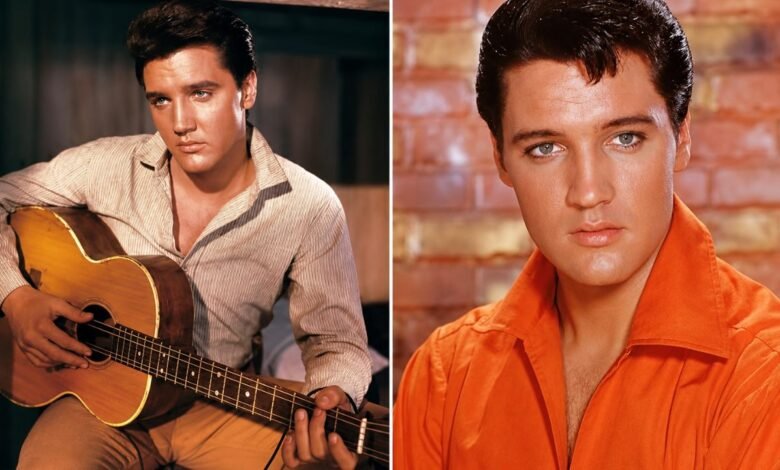
Elvis received his first guitar on his 11th birthday in 1946. The instrument became an important part of his early musical development, although there was nothing at the time to suggest that he would eventually become an international superstar.
His interest in music gradually became more serious as he grew older. He listened to different performers and developed a style that did not fit neatly into one existing musical category. That ability to draw from multiple traditions eventually became one of the most important features of his career.
Elvis Presley and His Musical Influences
Elvis Presley was influenced by several different forms of American music. Gospel was especially important because of his childhood church experiences and his continued interest in gospel performances. Country music also shaped his musical identity, while blues and rhythm and blues introduced him to sounds that were particularly influential during his teenage years in Memphis.
Instead of simply copying one style, Elvis combined these influences into something that felt different to mainstream audiences. His voice could sound soft and emotional in one performance and powerful and energetic in another. His stage movements also became an important part of the overall effect, making the music a visual experience as well as an auditory one.
His relationship with gospel music remained strong throughout his life. Elvis recorded and performed gospel material regularly, and all three of his Grammy wins were for gospel recordings. This side of his career is sometimes overshadowed by his rock-and-roll reputation, but it was an important part of his musical identity.
How Elvis Presley Started His Music Career
Elvis’s professional career began to take shape at Sun Records in Memphis. In 1953, he made an early recording at the studio, hoping to attract attention, and his potential eventually caught the interest of producer Sam Phillips. On July 5, 1954, Elvis recorded “That’s All Right,” a song that became a crucial early moment in his professional career.
The recording helped introduce audiences to a performer who sounded different from many established singers of the time. Elvis was accompanied by guitarist Scotty Moore and bassist Bill Black, and the combination produced an energetic sound that helped establish the foundation of his early career.
His first billed live performance took place at the Overton Park Shell in Memphis on July 30, 1954. As his performances became more popular, audiences began responding not only to his voice but also to his appearance and physical movements on stage.
The Move From Sun Records to RCA
By 1955, Elvis was becoming a major regional attraction. His growing popularity attracted the attention of RCA Victor, which acquired his recording contract from Sun Records later that year. This gave Elvis access to a much larger record company and significantly greater promotional opportunities.
The move proved decisive. His first RCA single, “Heartbreak Hotel,” became a major hit, while his debut RCA album also reached the top of the charts. Within a short period, Elvis had moved from a young Memphis performer to a national celebrity.
Elvis Presley and the Rise of Rock and Roll
Elvis Presley became one of the central figures in the rise of rock and roll during the 1950s. His music brought together elements of country, gospel, blues and rhythm and blues, while his appearance and stage behavior challenged expectations about how a mainstream male singer should perform.
Young audiences were fascinated by him, while some older observers considered his movements and image controversial. His popularity continued to grow despite the criticism. The combination of successful records, television appearances and live performances made him one of the most recognizable young entertainers in America.
His influence extended beyond individual songs. Elvis helped establish a new model for the modern popular entertainer, in which music, personality, fashion, physical performance and television exposure were all connected.
Elvis Presley and Television
Television played an enormous role in transforming Elvis into a household name. His first national television appearance came on the Dorsey Brothers Stage Show in January 1956. He subsequently appeared on several variety programs, attracting increasing attention with each performance.
His appearances on The Ed Sullivan Show became particularly famous. Millions of viewers watched Elvis perform, and the controversy surrounding his dancing only increased public interest. His final appearance on the program was famously filmed from the waist up, reflecting the concerns of television executives about his performance style.
Television gave Elvis access to audiences who had never attended one of his concerts. It also helped create a recognizable public image that followed him throughout his career.
Elvis Presley Songs That Defined His Career
Elvis Presley recorded songs across several musical styles throughout his career. His catalog includes rock and roll, country, gospel, blues, pop and ballads. Some songs became associated with his rebellious 1950s image, while others reflected the more mature performer he became during later decades.
Among the best-known Elvis Presley songs are:
- “That’s All Right”
- “Heartbreak Hotel”
- “Hound Dog”
- “Don’t Be Cruel”
- “All Shook Up”
- “Blue Suede Shoes”
- “Love Me Tender”
- “Jailhouse Rock”
- “Can’t Help Falling in Love”
- “Return to Sender”
- “In the Ghetto”
- “Suspicious Minds”
- “Burning Love”
- “Always on My Mind”
These songs represent only part of his enormous recording career. Elvis also recorded numerous gospel songs and performed material written by many different songwriters. His ability to interpret songs in his own way became one of the reasons his recordings remained popular across different periods of his career.
Elvis Presley and His Movie Career
Elvis became a Hollywood star shortly after reaching the height of his musical fame. His first movie, Love Me Tender, was released in 1956. The film performed well commercially and demonstrated that Elvis could attract audiences outside the music industry.
His movie career eventually included 31 feature films and two concert documentaries. Some of his most recognizable movies included Jailhouse Rock, King Creole, Blue Hawaii, Viva Las Vegas and G.I. Blues.
His films were not always highly regarded by critics, particularly as the 1960s progressed. Many followed formulas built around music, romance and comedy, but they were often financially successful. Their soundtracks also provided another way for Elvis’s songs to reach his fans.
Some Notable Elvis Presley Movies
A selection of his better-known films includes:
- Love Me Tender
- Loving You
- Jailhouse Rock
- King Creole
- G.I. Blues
- Blue Hawaii
- Girls! Girls! Girls!
- Viva Las Vegas
- Roustabout
- Change of Habit
His movie career eventually became a mixed blessing. Hollywood provided considerable income and exposure, but the demanding production schedule limited the amount of time he spent developing his live music career during much of the 1960s.
Why Elvis Presley Spent Much of the 1960s in Hollywood
During the 1960s, Elvis was heavily committed to making movies. Many of his films followed similar formulas, and the soundtracks became an important commercial part of each release. Although the movies kept his name in the public eye, the rapidly changing music industry was creating new competition.
The Beatles, Rolling Stones and other emerging performers were changing popular music. Elvis’s absence from the live stage also meant that audiences had fewer opportunities to see him perform in the way they had during the 1950s.
By the end of the decade, Elvis needed to demonstrate that he was still a serious musical performer. That opportunity arrived in 1968.
Elvis Presley in the U.S. Army
Elvis was drafted into the U.S. Army in 1958. He served from 1958 to 1960, spending much of his military service in Germany.
His military service was unusual because he entered the Army at the height of his fame. Many entertainers received special treatment, but Elvis served as a regular soldier. His decision to serve also helped change the public perception of him at a time when his rebellious image had made him controversial.
During his time in Germany, Elvis met Priscilla Beaulieu, who would later become his wife. His mother’s death during his military service was another deeply significant personal event during this period.
Elvis Presley Wife: Priscilla Presley
Elvis Presley met Priscilla Beaulieu while he was stationed in Germany. Their relationship continued after Elvis returned to the United States, and they eventually married on May 1, 1967, at the Aladdin Hotel in Las Vegas.
Their only child, Lisa Marie Presley, was born on February 1, 1968. The birth of Lisa Marie came during an important period in Elvis’s career, just as he was preparing for the television special that would help revive his musical reputation.
Elvis and Priscilla divorced in 1973. Although their marriage ended, Priscilla remained closely connected to Elvis and later played an important role in preserving aspects of his legacy and family history.
Elvis Presley Daughter: Lisa Marie Presley
Lisa Marie Presley was Elvis Presley’s only child. She was born in Memphis in 1968 and spent part of her childhood at Graceland, making her an important part of the Presley family story.
Elvis died when Lisa Marie was only nine years old. His death meant that she grew up with the unusual experience of being both a member of a private family and the only child of one of the world’s most famous entertainers.
Lisa Marie later became a singer-songwriter herself. She also became closely involved with her father’s estate and continued to carry the Presley name into another generation through her children.
Elvis Presley and Graceland
Elvis purchased Graceland in Memphis in 1957 for $102,500. The large property became his home and a central part of his personal life. His parents and grandmother lived there, and later Priscilla and Lisa Marie became part of the household.
Graceland eventually became much more than a private residence. After Elvis’s death, it developed into a place where fans could visit and connect with his life and career. The property opened to the public in 1982 and later received National Historic Landmark status.
Today, Graceland remains one of the strongest symbols of Elvis Presley. It represents his success, his family life, his personal possessions and the final chapter of his story.
Elvis Presley’s 1968 Comeback
The 1968 television special became one of the biggest turning points in Elvis’s career. After years of concentrating heavily on movies, he returned to television with a performance that emphasized his voice, guitar playing and stage personality.
The special showed a more direct and energetic Elvis than audiences had seen in many of his recent movie projects. He performed in a smaller setting and demonstrated that he still had the ability to command an audience without relying on a Hollywood production.
The response was strong enough to change the direction of his career. Elvis began focusing more heavily on live performances and recording, setting the stage for the Las Vegas years and his major concert tours of the 1970s.
Elvis Presley in Las Vegas
Elvis began his famous Las Vegas residency in 1969. The performances became an important part of his later career and introduced a new stage image.
His Las Vegas shows featured a large backing band, singers and increasingly elaborate costumes. The famous jumpsuits became strongly associated with his later public image, while his performances included older hits, newer songs and gospel material.
Las Vegas also demonstrated that Elvis could remain a major live attraction even after the musical landscape had changed dramatically since the 1950s. His concerts became major entertainment events rather than simply opportunities to hear his latest recordings.
Elvis Presley and Aloha From Hawaii
One of the most significant events of Elvis’s later career was Aloha from Hawaii. The concert was broadcast internationally in 1973 and demonstrated the scale of his global popularity.
The event also showed how television technology could turn a live performance into a worldwide entertainment event. Elvis’s stage presentation had become very different from the young performer who had first appeared on television in the 1950s.
By this point, Elvis had developed an established concert persona built around dramatic costumes, powerful vocals and a large supporting ensemble.
Elvis Presley in Concert and His Final Years
The final years of Elvis Presley’s career were filled with touring despite growing health problems. He continued performing for large audiences and remained commercially important, but his physical condition increasingly affected his personal and professional life.
In 1974, he continued a demanding schedule of concerts and recordings. His gospel recording of “How Great Thou Art” earned his third and final Grammy Award. All three of his Grammy wins were for gospel music.
During 1976, Elvis continued touring and recorded material at Graceland using mobile recording equipment. His final studio recordings were made during a period when his health was becoming increasingly fragile.
Elvis Presley’s Final Concert
Elvis performed his final concert on June 26, 1977, at Market Square Arena in Indianapolis, Indiana. He continued to prepare for additional touring afterward, despite the serious health problems that had developed during his later years.
His final performances are now viewed through the knowledge that his life was approaching its end. At the time, however, there was still an expectation that he would continue performing and recording.
How Did Elvis Presley Die?
Elvis Presley died on August 16, 1977, at Graceland in Memphis, Tennessee. He was 42 years old. The official cause was heart failure, while his long-term prescription drug use and declining health were important factors associated with his final years.
The news of his death spread rapidly around the world. Fans gathered outside Graceland, and the sudden loss of such a major entertainer shocked the music industry and the public.
Elvis was buried at Graceland, where his grave eventually became part of the site visited by millions of fans. His death did not end public interest in his life; instead, it began another stage of his legacy.
When Did Elvis Presley Die?
Elvis Presley died on August 16, 1977. He was 42 years old and died at his Memphis home, Graceland.
His final concert had taken place less than two months earlier in Indianapolis. At the time of his death, he was still scheduled to continue touring, demonstrating how active his career remained despite his worsening health.
The date of his death has become one of the most recognized dates in music history because of the enormous cultural impact he had achieved during his lifetime.
Elvis Presley and His Family Legacy
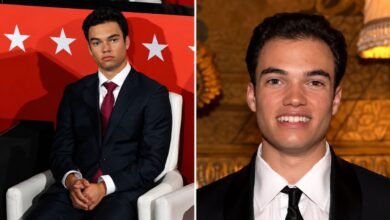
Elvis’s influence continued through his family after his death. His daughter Lisa Marie Presley became a singer and remained closely connected to his estate and legacy. Her children Riley Keough and Benjamin Keough later became part of the public story surrounding the Presley family.
Riley developed an independent career as an actress, producer and filmmaker. Benjamin remained more private but attracted attention because of his resemblance to Elvis and his reported interest in music.
Priscilla Presley also remained an important figure in preserving the family’s connection to Elvis. Together, these family members have helped keep different aspects of his personal history visible to later generations.
Elvis Presley and His Cultural Influence
Elvis Presley changed more than the music charts. He helped establish the idea that a performer could become a complete cultural personality whose music, clothing, hairstyle, movements and personal life all attracted public attention.
His influence can be seen in later generations of singers and performers who adopted elements of his stage presence. He also helped demonstrate the commercial possibilities of combining recording, television, movies and live performances.
His influence extended across several musical traditions as well. Although he is most closely associated with rock and roll, his recordings and performances reflected his continuing connection with gospel, country, blues and rhythm and blues.
Elvis Presley Movies About His Life
Interest in Elvis has continued through documentaries, television programs and feature films. Modern productions have examined different parts of his life, from his musical beginnings to his relationship with fame and his final years.
Baz Luhrmann’s 2022 film Elvis introduced his story to a new generation through a highly stylized interpretation of his life and career. The movie focused heavily on Elvis’s rise to fame, his relationship with Colonel Tom Parker and the pressures surrounding his career.
The continued production of Elvis-related films demonstrates that audiences remain interested in understanding the person behind the famous image. His story provides filmmakers with material involving music, family, fame, business, controversy and cultural change.
EPiC: Elvis Presley in Concert
EPiC: Elvis Presley in Concert brought renewed attention to Elvis’s live performances in 2026. The concert film uses archival material to focus on Elvis during his later touring years and gives modern viewers an opportunity to experience performances from a period that remains central to his legacy.
The project also demonstrates how much interest remains in Elvis’s concert career. Rather than concentrating only on his early rock-and-roll success, the film explores the performer he became during the 1970s.
For audiences discovering Elvis for the first time, projects such as this provide another way to understand why his stage performances became such an important part of his reputation.
Kanye West and Elvis Presley
The phrase “Kanye West and Elvis Presley” sometimes appears in searches because Kanye West has referenced Elvis when discussing the challenges faced by major performers. There was no professional collaboration between the two artists.
The comparison is mainly interesting because it shows how Elvis continues to function as a reference point for later musicians. His name has become associated with exceptional fame, cultural influence and the difficulties that can come with being a highly successful performer.
Elvis’s position in popular culture is therefore not limited to people who listened to him during his lifetime. Modern artists continue to refer to him when discussing music, fame and the entertainment industry.
Why Elvis Presley Remains Famous
There are several reasons Elvis Presley remains relevant nearly five decades after his death. First, his music continues to be recorded, streamed, performed and rediscovered by new generations. Second, his movies and television appearances preserve his image beyond his original recordings.
Another important factor is the scale of his personal story. Elvis’s life includes poverty, sudden fame, controversial performances, military service, Hollywood success, marriage, fatherhood, a major comeback and a tragic death.
His connection to Graceland has also helped preserve his memory. Few entertainers are as strongly associated with a particular home as Elvis is with Graceland, which has become both a historic property and a destination for fans.
Conclusion
Elvis Presley transformed from a young musician from Tupelo into one of the most recognizable entertainers in the world. His combination of gospel, country, blues, rhythm and blues and popular music helped shape the development of rock and roll, while his television appearances and stage performances changed the expectations placed on popular entertainers.
His career was much broader than his early rock-and-roll success. He became a Hollywood actor, served in the U.S. Army, married Priscilla Presley, became the father of Lisa Marie Presley, returned to the stage through his 1968 comeback and developed an influential Las Vegas concert career. Graceland eventually became the physical center of his legacy.
Elvis Presley’s final years were marked by continued performances alongside serious health problems, and he died at Graceland on August 16, 1977, at the age of 42. Yet his death did not end his cultural influence. His music, movies, family history, performances and home continue to attract audiences, making Elvis one of the rare entertainers whose legacy remains deeply embedded in popular culture decades after his passing.
FAQs About Elvis Presley
Who was Elvis Presley?
Elvis Presley was an American singer and actor who became one of the most influential figures in rock and roll. His music combined elements of gospel, country, blues, rhythm and blues and popular music.
When did Elvis Presley die?
Elvis Presley died on August 16, 1977, at Graceland in Memphis, Tennessee. He was 42 years old.
How did Elvis Presley die?
Elvis Presley died from heart failure at Graceland. His declining health and long-term prescription drug use were significant factors associated with his final years.
Who was Elvis Presley’s daughter?
Elvis Presley’s only child was Lisa Marie Presley, who was born on February 1, 1968. Lisa Marie later became a singer-songwriter and had four children, including Riley Keough and Benjamin Keough.
Who was Elvis Presley’s wife?
Elvis Presley’s wife was Priscilla Presley. They married on May 1, 1967, in Las Vegas and had one daughter, Lisa Marie Presley, before divorcing in 1973.